
Real Estate Agents in Croatia – Vital Role for Foreign Buyers
Most Canadian investors face steep challenges when navigating international real estate markets, especially in Croatia. With over 60% of vacation home transactions involving foreign buyers, understanding the local property landscape becomes crucial for North American and Australian clients. This article reveals how professional agents in Croatia provide tailored support that simplifies complicated regulations, ensures transparent costs, and helps discerning investors secure prime opportunities with confidence.
Table of Contents
- What Real Estate Agents Do in Croatia
- Types of Services for International Clients
- Legal Framework and Agent Qualifications
- Navigating Common Challenges and Risks
- Fees, Commissions, and Cost Transparency
Key Takeaways
| Point | Details |
|---|---|
| Role of Real Estate Agents | Agents in Croatia are crucial for guiding international buyers through property transactions, ensuring legal compliance and market insight. |
| Services Provided | They offer legal consultation, documentation management, and market navigation to simplify complex acquisitions for foreign clients. |
| Legal Framework | Croatian regulations require agents to possess in-depth knowledge and qualifications, assuring clients of their professionalism and reliability. |
| Cost Awareness | International buyers should be mindful of fees, commissions, and additional costs, and negotiate transparently with real estate agents to avoid surprises. |
What Real Estate Agents Do in Croatia
Real estate agents in Croatia serve as critical intermediaries, helping foreign buyers navigate the complex landscape of property transactions. Their role extends far beyond simply finding and showing properties, encompassing a comprehensive suite of professional services designed to simplify international real estate investments. Expert market insights from local research institutions reveal the nuanced responsibilities these professionals undertake.
These professionals specialize in connecting international investors with suitable Croatian properties, offering deep expertise in local regulations, market trends, and transaction protocols. They help buyers understand critical aspects such as zoning laws, property ownership restrictions for foreigners, tax implications, and regional market dynamics. For North American and Australian investors unfamiliar with Croatian real estate processes, agents provide invaluable translation of complex legal and administrative requirements, ensuring smooth and compliant property acquisitions.
Specifically, real estate agents in Croatia perform multifaceted tasks including property valuation, negotiation, documentation preparation, and legal compliance verification. They play a pivotal role in bridging communication between international buyers and local sellers, managing everything from initial property searches to final transaction closures. Their services are particularly crucial in tourist regions and urban centres where property markets can be intricate and rapidly evolving.
Pro tip: Always verify your real estate agent’s credentials and local professional certifications before engaging their services in Croatia to ensure comprehensive and legally sound representation.
Types of Services for International Clients
International real estate clients in Croatia encounter a sophisticated range of services designed to simplify complex property transactions. Government guidelines outline specific support mechanisms that help navigate the intricate landscape of property acquisition for non-Croatian nationals. These services encompass comprehensive assistance across legal, administrative, linguistic, and consultative domains.
The primary services for international clients typically include legal consultation, documentation management, and market navigation. Specialized real estate professionals offer targeted support such as translating official documents, explaining ownership regulations for foreigners, and providing detailed insights into regional property market dynamics. Particularly for non-European Union investors, agents help decode complex administrative requirements, assist with permit applications, and ensure full compliance with Croatian property ownership laws.
Beyond basic transactional support, these services extend to comprehensive advisory roles. Agents provide nuanced guidance on tax implications, investment potential, regional variations in property values, and strategic recommendations tailored to individual client objectives. They bridge cultural and regulatory gaps, offering North American and Australian investors strategic insights into Croatia’s unique real estate ecosystem, including information about zoning restrictions, potential renovation challenges, and long-term investment considerations.
Pro tip: Request a detailed service scope document from your real estate agent that explicitly outlines all included services, potential additional costs, and specific responsibilities to avoid misunderstandings during your property acquisition journey.
Here’s a summary of key services offered by Croatian real estate agents to international clients:
| Service Area | Purpose | Benefit to International Clients |
|---|---|---|
| Legal Consultation | Clarifies property laws and regulations | Ensures legal compliance and confidence |
| Documentation Management | Handles paperwork and translations | Reduces errors and administrative burden |
| Market Navigation | Provides local market insights | Informs smarter investment decisions |
| Tax and Compliance Advisory | Explains tax and ownership issues | Prepares for hidden costs and obligations |
Legal Framework and Agent Qualifications
Croatian real estate regulations establish rigorous standards for professional agents, ensuring comprehensive protection for both domestic and international clients. Professional qualifications for real estate agents involve complex legal and educational requirements that go far beyond basic sales skills. These standards mandate deep understanding of property laws, market dynamics, and ethical practices specific to international property transactions.
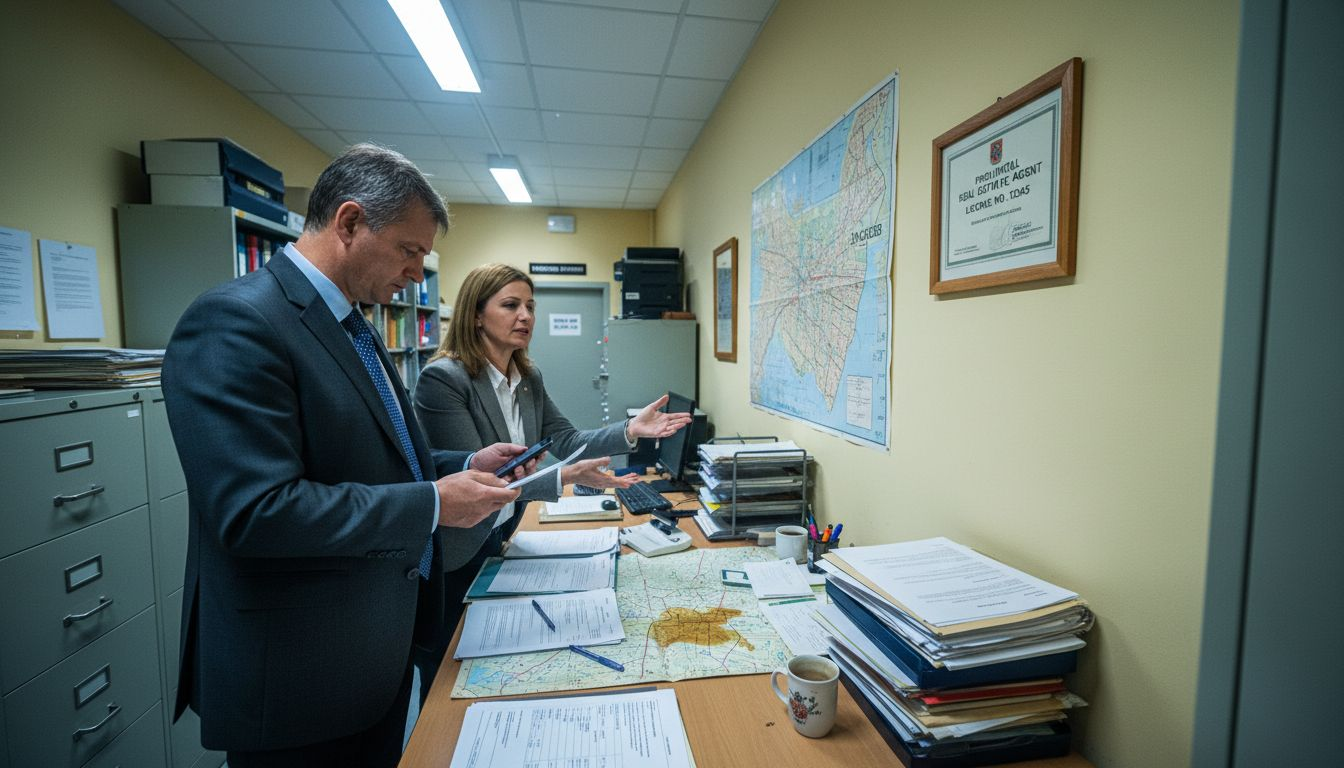
The legal framework governing real estate agents in Croatia encompasses several critical dimensions. Professional licensing requires agents to complete specialized training programs, pass comprehensive examinations, and maintain ongoing education in property regulations. For international clients, this means working with professionals who possess specialized knowledge about cross-border property acquisitions, foreign ownership restrictions, tax implications, and complex legal documentation processes. Agents must demonstrate expertise in navigating the nuanced landscape of Croatian property law, including understanding reciprocity agreements, ownership transfer protocols, and specific requirements for non-European Union investors.
Additionally, Croatian real estate agents are bound by strict ethical and professional standards that prioritize client transparency and legal compliance. Their responsibilities include providing accurate market information, representing client interests with utmost integrity, and ensuring all transaction documentation meets stringent legal requirements. This framework creates a robust system of accountability, requiring agents to maintain professional liability insurance, adhere to disclosure regulations, and continuously update their knowledge of evolving property legislation. For North American and Australian investors, these rigorous standards offer critical reassurance about the professionalism and reliability of their chosen real estate representatives.
Pro tip: Always request and verify an agent’s current professional licence number and registration status with the Croatian real estate regulatory body to confirm their legal standing and professional credentials.
Navigating Common Challenges and Risks
Complex legal procedures and potential administrative barriers represent significant challenges for international property buyers in Croatia. Foreign investors must navigate a nuanced landscape of regulatory requirements, reciprocity rules, and potential documentation complications that can substantially impact property acquisition strategies. Understanding these challenges is crucial for successfully managing cross-border real estate investments.
The primary risks for international buyers encompass several critical dimensions. Regulatory restrictions particularly affect non-European Union nationals, who encounter more stringent requirements for property ownership. These challenges include obtaining governmental consents, understanding complex tax implications, and managing potential delays in ownership registration. Market fluctuations and investment risks demand comprehensive due diligence from investors, with particular attention to property status verification, legal restrictions on specific land types, and potential market demand variations.
North American and Australian investors must be especially vigilant about potential pitfalls in the Croatian real estate market. Key risk mitigation strategies involve comprehensive document verification, engaging local legal expertise, and maintaining flexibility throughout the transaction process. This includes understanding unique local regulations about agricultural land purchases, potential language barriers, and the intricacies of property transfer protocols. Professional guidance becomes essential in navigating these complex regulatory landscapes, helping investors avoid costly misunderstandings and potential legal complications.
Pro tip: Allocate a minimum of 10% additional budget beyond the property purchase price to cover potential administrative costs, legal fees, and unexpected regulatory requirements during your Croatian real estate transaction.
Fees, Commissions, and Cost Transparency
The Croatian real estate market involves a complex fee structure that international buyers must carefully understand to avoid unexpected financial implications. Commission rates typically range between 3% to 6% of the property’s total purchase price, with variations depending on the property type, location, and specific services provided by real estate agents. These fees are generally split between buyer and seller’s agents, creating a nuanced compensation framework that differs from traditional market practices in North America and Australia.
Breakdown of potential costs for international investors include several critical components. Agency commissions represent the most visible expense, but buyers must also account for additional financial obligations such as legal fees, property transfer taxes, notary charges, and administrative processing costs. These supplementary expenses can add approximately 5% to 10% to the total transaction value, making comprehensive financial planning essential. Foreign investors should anticipate and budget for these comprehensive costs, understanding that transparency requires detailed documentation and upfront discussions with real estate professionals.
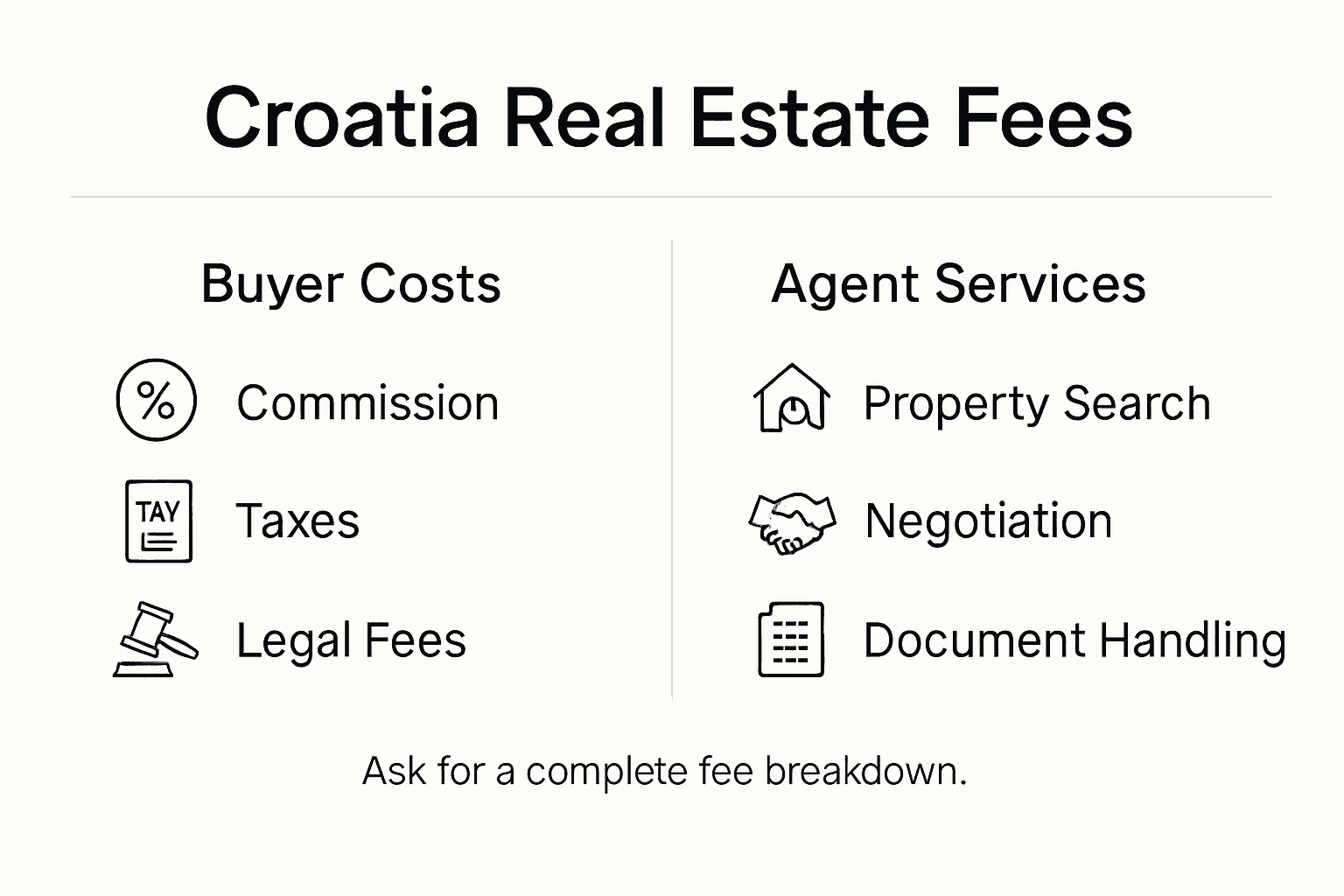
Negotiation strategies play a crucial role in managing these financial considerations. Sophisticated international buyers can often negotiate commission rates, especially for higher-value properties or complex transactions. Some agents may offer sliding scale commissions or flexible fee structures based on the property’s characteristics and the complexity of the international transfer. North American and Australian investors should approach these discussions professionally, requesting itemized fee breakdowns, understanding the specific services included, and clarifying any potential additional charges before finalizing agreements.
Pro tip: Request a comprehensive written fee agreement that itemizes all potential costs, including explicit breakdowns of agency commissions, legal fees, and administrative expenses, to prevent unexpected financial surprises during your Croatian property transaction.
To better understand cost considerations, here is an overview of common fees and strategies:
| Cost Component | Typical Range | Importance for Buyers |
|---|---|---|
| Agent Commission | 3% – 6% of price | Core cost, open to negotiation |
| Legal Fees | 1% – 2% of price | Ensures contracts meet standards |
| Transfer Tax | Approximately 3% | Mandatory government levies |
| Notary/Admin Fees | 1% – 2% of price | Covers official registration |
| Contingency Budget | 10% of purchase | Funds for unexpected requirements |
Simplify Your Croatian Property Investment Journey with Expert Guidance
Navigating Croatia’s complex real estate market as a foreign buyer can feel overwhelming. From understanding legal frameworks and tax implications to managing language barriers and intricate documentation, the challenges are real. At 385 Real Estate, we recognise these critical pain points and specialise in offering seamless support designed specifically for international investors, expatriates, and high-net-worth individuals seeking vacation homes or permanent residences. Our deep local market insights and tailored services ensure you avoid costly mistakes and confidently secure your ideal property.
Why risk delays or legal complications when you can work with trusted professionals who speak your language and understand your needs? Whether you are concerned about regulatory restrictions or want clear transparency around fees and commissions, our team in Split is ready to guide you every step of the way.
Ready to make your Croatian property dream a reality? Explore our comprehensive service options and start your journey today.
Discover the difference of dedicated expertise at 385 Real Estate. Visit our landing page to browse curated listings and learn more about how we tailor our services for foreign buyers. Don’t navigate Croatia’s real estate market alone. Connect with us now to ensure your purchase is smooth, legally compliant, and fully supported.
Frequently Asked Questions
What services do real estate agents in Croatia offer to foreign buyers?
Real estate agents in Croatia provide services that include legal consultation, documentation management, market navigation, and tax compliance advisory. They help foreign buyers understand local regulations, manage paperwork, and offer insights into property values and investment potential.
How do I verify the credentials of a real estate agent in Croatia?
To verify an agent’s credentials in Croatia, request their current professional licence number and registration status with the Croatian real estate regulatory body. This ensures that the agent is legally recognized and holds the necessary qualifications to assist with property transactions.
What are the typical fees associated with hiring a real estate agent in Croatia?
Agency commissions in Croatia typically range from 3% to 6% of the property’s purchase price. In addition to this, buyers should account for legal fees, property transfer taxes, and notary charges, which may add an extra 5% to 10% to the total transaction cost.
What are the challenges foreign buyers face when purchasing property in Croatia?
Foreign buyers often encounter challenges such as regulatory restrictions, especially for non-European Union nationals, complex legal procedures, and potential documentation complications. Understanding these issues is crucial for managing cross-border real estate investments effectively.
Recommended
- Can Foreigners Buy Property in Croatia? Complete 2025 Guide – 385 Real Estate
- Ultimate Buyer’s Guide: How to Buy Property in Croatia – 385 Real Estate
- Ultimate Seller’s Guide: How to Sell Your Property in Croatia – 385 Real Estate
- Croatia Real Estate Market Slowdown 2025: Buyer’s Guide for Foreign Investors
- Yigal Realty