What Is Croatian Real Estate for Global Investors
Most Canadian and American investors are surprised to learn that Croatia’s property market attracts over 2,000 foreign buyers each year. Croatia stands out with its picturesque Adriatic coastline and a property system distinct from other European destinations, offering both opportunities and challenges for international clients. This guide gives Canadian buyers a clear breakdown of Croatia’s property types, legal requirements, and practical steps, arming you with the expertise needed to make sound real estate decisions in this market.
Table of Contents
- Defining Croatian Real Estate and Its Scope
- Types of Properties in Croatia Explained
- Buying Process for International Clients
- Legal Framework and Ownership Rights
- Taxes, Fees, and Ongoing Costs
Key Takeaways
| Point | Details |
|---|---|
| Diverse Property Options | Croatia offers various real estate categories including residential, commercial, agricultural, and tourism properties, catering to different investment needs. |
| Complex Legal Landscape | International buyers must navigate intricate regulations and engage local legal counsel to ensure compliance and protect their investments. |
| Upfront and Ongoing Costs | Investors should be aware of various taxes, fees, and recurring expenses associated with property ownership in Croatia, including transfer taxes and maintenance costs. |
| Due Diligence is Critical | Conduct comprehensive title searches and seek local expertise before making investments to mitigate potential legal and financial pitfalls. |
Defining Croatian Real Estate and Its Scope
Croatian real estate represents a diverse and dynamic investment landscape spanning multiple property types and geographical regions. Unlike many European markets, Croatia offers unique opportunities for global investors seeking residential, commercial, and agricultural properties across its picturesque coastal and inland territories. Complex property registration systems characterize the Croatian real estate market, creating both challenges and opportunities for international buyers.
The Croatian real estate market broadly encompasses five primary property categories: residential properties, commercial spaces, agricultural land, forest properties, and development plots. Residential real estate includes apartments in urban centres like Zagreb and Split, seaside villas along the Adriatic coast, and traditional stone houses in historic rural regions. Commercial properties range from modern office complexes in business districts to retail spaces in tourist-heavy coastal towns. Agricultural and forest properties represent significant investment segments, particularly for those interested in land development or sustainable investment strategies.
Investors should understand that Croatian real estate transactions involve intricate legal and bureaucratic processes. The national real estate registration system requires thorough documentation and precise boundary definitions, which can create complexity for foreign investors. Public records often lack complete accuracy, necessitating comprehensive due diligence and potentially engaging local legal expertise to navigate property acquisitions effectively.
Pro tip: Before investing, always conduct a comprehensive title search and engage a local Croatian real estate lawyer to verify property boundaries and legal status.
Types of Properties in Croatia Explained
Croatia offers a rich and diverse real estate landscape with multiple property types appealing to different investor profiles and strategic objectives. Croatian real estate market segments include six primary categories: residential properties, commercial spaces, agricultural land, forest properties, development plots, and tourism-oriented real estate. Each category presents unique investment characteristics, legal considerations, and potential returns for global investors seeking opportunities in this emerging European market.
Residential properties dominate the Croatian real estate market, encompassing urban apartments in major cities like Zagreb and Split, coastal villas along the Adriatic, and traditional stone houses in rural regions. Apartments range from compact city centre units to spacious multi-bedroom configurations, while standalone homes offer opportunities for renovation and personalisation. Commercial real estate includes modern office complexes, retail spaces in tourist destinations, and industrial properties in economic zones, providing diversified investment options for businesses and institutional investors.
Specialized property types like agricultural and forest lands represent significant investment segments with unique regulatory frameworks. Foreign property ownership regulations impose specific restrictions on land acquisitions, particularly for non-European Union citizens. Agricultural properties require careful legal review, as ownership transfer involves complex bureaucratic processes and potential limitations for international buyers. Investors must conduct thorough due diligence and potentially seek local legal expertise to navigate these specialized property categories effectively.
Pro tip: Consult a local Croatian real estate lawyer specializing in foreign property transactions to understand the nuanced ownership restrictions for each property type before making any investment decisions.
Here is a summary of Croatian property types and their key investment features:
| Property Type | Common Locations | Investment Potential | Noteworthy Challenges |
|---|---|---|---|
| Residential | Cities, Adriatic Coast | High rental demand | Title verification, market trends |
| Commercial | Urban, tourist centres | Steady returns | Complex legal structures |
| Agricultural Land | Inland, rural regions | Long-term appreciation | Ownership restrictions |
| Forest Property | Rural, mountain zones | Conservation options | Regulatory hurdles |
| Development Plots | Suburbs, coastline | Value growth | Approval and zoning issues |
| Tourism Real Estate | Coast, islands | Seasonal income | Licencing and management costs |
Buying Process for International Clients
Foreign investors interested in Croatian real estate must navigate a structured and legally complex acquisition process that varies significantly depending on their nationality and specific property type. Foreign property purchase regulations require international buyers to follow a systematic approach involving multiple administrative and legal steps. The process begins with obtaining a Croatian tax identification number and understanding the distinct requirements for European Union and non-EU citizens.
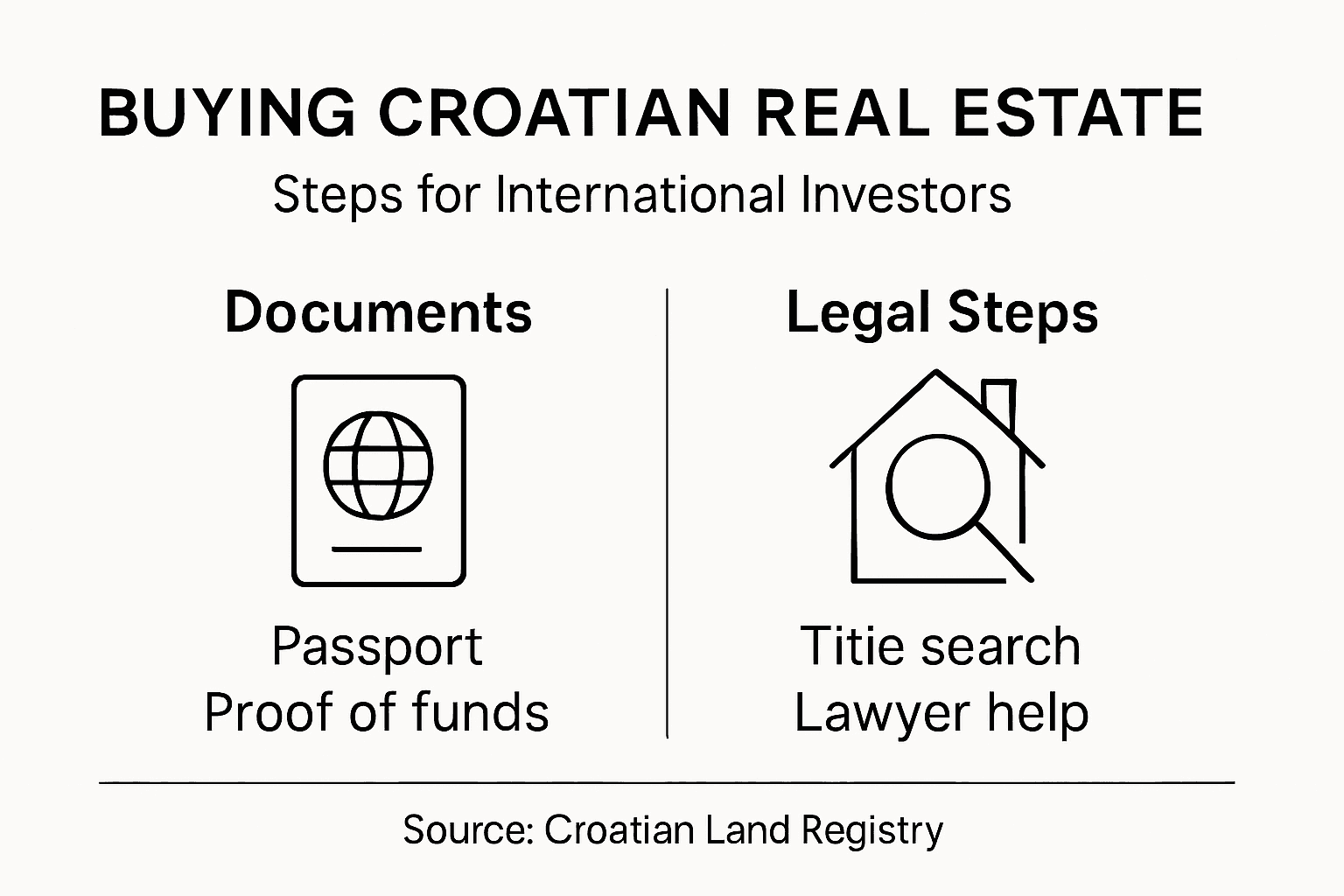
EU citizens generally experience a more straightforward purchasing process, enjoying nearly identical property acquisition rights as Croatian nationals. Non-EU investors, however, face additional bureaucratic requirements, including obtaining specific governmental approvals and submitting comprehensive documentation. Typically, the buying process involves several critical stages: property identification, conducting thorough due diligence, signing preliminary agreements, engaging a local legal representative, completing comprehensive title searches, and navigating potential reciprocity agreements between Croatia and the investor’s home country.
Property ownership documentation demands meticulous attention to detail, with international buyers required to compile an extensive portfolio of legal documents. This documentation typically includes proof of funds, passport copies, residency verification, and detailed property inspection reports. Non-EU nationals must additionally secure ministerial approvals, which can extend the acquisition timeline and introduce complex legal considerations. Professional legal representation becomes crucial in managing these intricate procedural requirements and ensuring compliance with Croatian real estate regulations.
Pro tip: Engage a Croatian real estate lawyer specializing in international transactions at the earliest stage of your property search to streamline the complex acquisition process and mitigate potential legal complications.
Legal Framework and Ownership Rights
Croatia’s property ownership regulations create a nuanced legal landscape for international investors, with ownership rights carefully structured to balance national interests and foreign investment opportunities. The Ownership and Other Real Rights Act serves as the primary legislative framework governing real estate acquisitions, establishing distinct rules for different categories of foreign buyers. These regulations fundamentally differentiate between European Union and non-EU investors, creating a complex but navigable pathway for international property ownership.
EU and European Economic Area (EEA) citizens generally enjoy the most straightforward property acquisition process, receiving treatment nearly equivalent to Croatian nationals. Non-EU investors face more stringent requirements, including obtaining ministerial consent and demonstrating reciprocity with their home country. Significant variations exist across different property types, with residential and commercial real estate having more permissive regulations compared to agricultural and forest lands, which maintain more restrictive ownership conditions. Legal protections for foreign investors ensure transparent property registration processes and robust title security mechanisms.
Specific legal considerations vary dramatically based on property classification and investor nationality. Agricultural land purchases, for instance, impose the most significant restrictions, typically requiring extensive governmental approvals and demonstrating compliance with complex regulatory frameworks. Commercial and residential properties generally offer more accessible ownership pathways, particularly for investors from EU member states and select OECD countries. Professional legal counsel becomes crucial in navigating these intricate regulatory landscapes, helping international buyers understand specific requirements, potential limitations, and strategic approaches to property acquisition.
Pro tip: Engage a Croatian real estate lawyer specializing in international property law to conduct a comprehensive review of ownership restrictions specific to your nationality and intended property type before initiating any purchase negotiations.
Taxes, Fees, and Ongoing Costs
International investors in Croatian real estate must navigate a complex landscape of financial obligations and taxation that significantly impact overall investment costs. The financial framework includes multiple layers of taxes and fees spanning the initial property acquisition and subsequent ownership periods. Buyers should anticipate upfront expenses including real estate transfer tax, notary fees, land registry registration costs, and potential value-added tax (VAT) depending on the specific property type and transaction structure.
Annual property taxation in Croatia varies based on property location, type, and size, with local municipalities implementing distinct tax rates and assessment methodologies. Residential properties typically incur lower annual taxes compared to commercial real estate, while agricultural and undeveloped lands may have different tax calculation mechanisms. Foreign investors must also consider capital gains tax implications, which apply when selling properties and are calculated based on the difference between purchase and sale prices, with potential exemptions for long-term ownership.
Tax compliance and financial planning require meticulous attention to detail, particularly for international buyers. Potential additional costs include mandatory property insurance, utility connection fees, potential renovation expenses, and ongoing maintenance charges. Non-resident investors should also investigate tax treaties between Croatia and their home country to optimize potential tax efficiencies and avoid double taxation scenarios. Professional financial advisement becomes crucial in understanding the nuanced fiscal landscape and developing comprehensive investment strategies.
Pro tip: Consult a Croatian tax specialist with international expertise to develop a comprehensive financial model that accurately captures all potential taxes, fees, and recurring costs associated with your specific real estate investment.
The following table compares upfront costs and ongoing taxes for different Croatian property types:
| Property Type | Common Upfront Fees | Typical Annual Taxes | Other Recurring Costs |
|---|---|---|---|
| Residential | Transfer tax, notary, registry | Lower than commercial | Insurance, maintenance |
| Commercial | Transfer tax, VAT, registry | Higher rates | Utilities, compliance expenses |
| Agricultural | Transfer tax, registry, approvals | Variable local rates | Land stewardship costs |
| Forest Land | Registry, legal documentation | Often minimal | Conservation, access fees |
Navigate Croatian Real Estate with Confidence and Expert Support
Investing in Croatian real estate offers exciting opportunities but also presents complex challenges such as navigating ownership restrictions, understanding tax obligations, and managing intricate legal processes. Whether you are an international buyer seeking residential, commercial, or agricultural properties, tackling issues like title verification, foreign property laws, or bureaucratic approvals can feel overwhelming. At 385 Real Estate, we specialise in helping foreign investors overcome these hurdles with personalised guidance tailored to your specific situation.
Discover a comprehensive approach that combines local market insights, detailed property listings, and expert legal and financial support designed for global clients. Why wait to make your Croatian real estate dreams a reality? Visit 385 Real Estate today to explore how our team can streamline your investment journey. Start with our easy property search and gain access to trusted agent advice that simplifies every step from initial inquiry to closing.
Explore more about buying overseas by visiting our comprehensive services and equip yourself with the knowledge and support needed for a successful investment in Croatia.
Frequently Asked Questions
What types of properties are included in Croatian real estate?
Croatian real estate includes residential properties, commercial spaces, agricultural land, forest properties, development plots, and tourism-oriented real estate.
What challenges do international investors face when buying property in Croatia?
International investors may encounter complex legal and bureaucratic processes, including navigating property registration, obtaining approvals, and ensuring compliance with foreign ownership regulations.
How does the buying process differ for EU and non-EU citizens in Croatia?
EU citizens generally experience a more straightforward purchasing process with similar rights to Croatian nationals, while non-EU citizens must secure additional approvals and comply with more stringent bureaucratic requirements.
What are the main ongoing costs associated with owning property in Croatia?
Ongoing costs include annual property taxes, mandatory insurance, maintenance expenses, and any potential renovation costs, which can vary based on the property type and location.
Recommended
- Can Foreigners Buy Property in Croatia? Complete 2025 Guide – 385 Real Estate
- Ultimate Buyer’s Guide: How to Buy Property in Croatia – 385 Real Estate
- Blog List – 385 Real Estate
- Croatia Real Estate Market Slowdown 2025: Buyer’s Guide for Foreign Investors
- Yigal Realty
- Digital Marketing’s Impact on Real Estate Success