
Investment Property Guide Croatia: Secure Your Ideal Asset
Most Canadian and Australian investors underestimate how quickly Croatian vacation properties can generate impressive returns. For those seeking a blend of lifestyle and smart investment, Croatia offers unique challenges and rewards. Understanding the specific steps for buying real estate here will help you avoid costly mistakes, take advantage of favorable market conditions, and build your ideal property portfolio with confidence.
Table of Contents
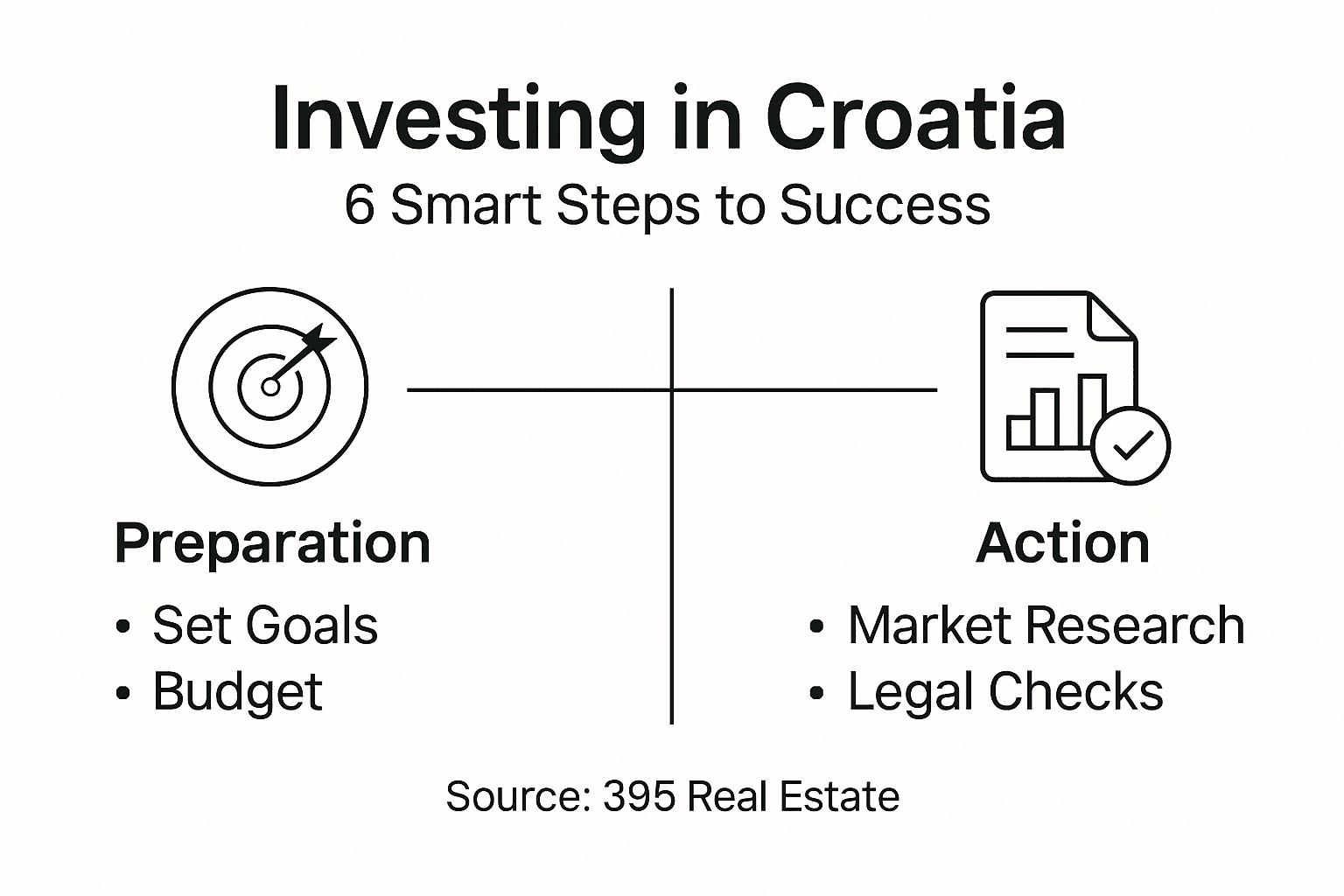
- Step 1: Define Your Investment Goals And Budget
- Step 2: Research Prime Croatian Property Markets
- Step 3: Engage A Trusted Local Real Estate Agency
- Step 4: Review Legal And Financial Requirements
- Step 5: Inspect Properties And Perform Due Diligence
- Step 6: Complete Your Investment And Verify Ownership
Quick Summary
| Key Message | Explanation |
|---|---|
| 1. Define Your Investment Goals | Clearly outline if you’re aiming for rental income, capital appreciation, or a vacation property to guide your strategy. |
| 2. Research Croatian Property Markets | Focus on prime areas like Zagreb, Split, and Dubrovnik, analysing market trends and local dynamics for informed decisions. |
| 3. Engage a Reliable Local Agency | Choose a well-reviewed agency with expertise in your target area to navigate legalities and market intricacies effectively. |
| 4. Understand Legal Requirements | Familiarize yourself with the regulations for foreign buyers based on citizenship to ensure a smooth purchasing process. |
| 5. Conduct Thorough Inspections | Systematically check property conditions and legal documentation to mitigate risks and verify potential value before finalizing. |
Step 1: Define your investment goals and budget
Building a successful investment property strategy starts with crystal-clear goal setting. Whether you are aiming to generate passive rental income or pursue short-term property appreciation in Croatia, understanding your financial objectives is fundamental. Assessing investment property strategies requires honest self reflection about your financial capacity, risk tolerance, and time commitment.
Start by determining your primary investment motivation. Are you seeking monthly rental returns from a seaside apartment in Split? Targeting long-term capital appreciation in emerging Croatian markets? Perhaps you want a vacation property that doubles as an investment asset. Each goal demands a different approach to property selection, financing, and management. Consider factors like your current financial resources, investment timeline, desired return on investment, and comfort with potential market fluctuations.
Calculate your total budget comprehensively by factoring in all potential expenses. This means looking beyond the purchase price to include closing costs, potential renovation expenses, ongoing maintenance, property management fees, and contingency funds. Property investment requires careful financial planning that accounts for potential vacancy periods and unexpected maintenance challenges. Align your budget with your investment goals to create a realistic and sustainable strategy.
Insider Advice: Research local Croatian property markets thoroughly and consult with a tax professional to understand all potential financial implications before making your investment decision.
Here’s a comparison of investment motivations and their typical property features in Croatia:
| Investment Goal | Typical Property Type | Expected Returns |
|---|---|---|
| Passive rental income | Seaside apartments | Steady monthly cash flow |
| Capital appreciation | Properties in growing cities | Potential long-term profit |
| Vacation and investment blend | Coastal villas | Seasonal personal use + rental income |
Step 2: Research prime Croatian property markets
Navigating the Croatian real estate landscape requires strategic and comprehensive market research. Croatian real estate market transactions demonstrate strong investment potential across diverse regions, with key markets offering unique opportunities for discerning international investors. Understanding the nuanced dynamics of local property markets will help you make informed decisions that align with your investment goals.

Focus your research on prime locations that consistently show robust investment potential. Zagreb presents robust commercial opportunities, while coastal cities like Split and Dubrovnik attract significant tourism and rental market interest. Analyse property types meticulously, considering seafront villas, renovated stone houses, and modern apartments that appeal to both local and international buyers. Pay special attention to emerging neighbourhoods, infrastructure developments, and economic indicators that could impact property values. Consider factors such as proximity to amenities, tourism potential, accessibility, and future urban development plans.
Leverage multiple research channels to gather comprehensive insights. Consult local real estate agencies, review market reports, attend property exhibitions, and engage with expat communities. Understand legal requirements for foreign property ownership, potential tax implications, and investment regulations. Online resources, government statistical offices, and professional real estate networks can provide valuable market intelligence to support your investment strategy.
Insider Advice: Create a detailed spreadsheet tracking property market trends, potential return on investment, and comparative prices across different Croatian regions to support your decision making process.
Step 3: Engage a trusted local real estate agency
Selecting the right real estate agency is critical to successfully navigating the Croatian property market. Top local real estate agencies provide essential expertise for international investors, offering personalized guidance through complex transaction landscapes. Your chosen agency will be your primary partner in understanding local market nuances, legal requirements, and investment opportunities.
Research potential agencies thoroughly by examining their track record with international clients, language capabilities, and specialisation in your target regions. Look for agencies with proven experience in coastal and urban markets, particularly those demonstrating strong knowledge of areas like Split, Zagreb, and Dubrovnik. Verify their credentials, read client testimonials, and schedule initial consultations to assess their communication style and depth of market understanding. Pay close attention to agencies that offer comprehensive services including property search, legal support, transaction management, and post purchase assistance.
During your initial meetings, prepare a detailed brief of your investment objectives, budget constraints, and specific property preferences. Request comprehensive market analysis, potential return on investment projections, and transparent information about transaction costs. A reputable agency will provide clear insights into local regulations, tax implications, and potential challenges for foreign property investors. Establish clear communication channels and confirm their willingness to provide ongoing support throughout your investment journey.
Insider Advice: Request references from previous international clients and verify the agency’s professional memberships and licensing credentials before making a final commitment.
Step 4: Review legal and financial requirements
Navigating the legal landscape of Croatian property investment requires careful understanding of complex regulations specific to foreign buyers. Property buying rules for foreigners vary significantly depending on your citizenship status, with distinct processes for EU and non EU citizens. Understanding these nuanced requirements is crucial to ensuring a smooth and compliant property acquisition process.
As an international investor, you will need to distinguish between different legal frameworks based on your nationality. EU and European Economic Area citizens enjoy relatively straightforward property purchasing rights, while third country nationals face more intricate approval processes. Key requirements include obtaining a Croatian tax identification number, preparing notarized contracts, and potentially securing ministerial approval. Be prepared for potential waiting periods ranging from 30 to 180 days for non EU citizens, and understand that certain restrictions exist particularly for agricultural land purchases.
Consult with legal professionals specializing in Croatian real estate transactions to navigate these complexities effectively. Verify all documentation meticulously, including proof of reciprocity, tax compliance, and ownership transfer permissions. Ensure you budget for additional costs such as transfer taxes, legal fees, and potential administrative expenses associated with foreign property acquisition. Comprehensive due diligence will help you mitigate risks and streamline your investment journey.
Insider Advice: Engage a bilingual legal expert who understands both Croatian property law and your home country’s international property investment regulations to provide comprehensive guidance.
To help international buyers, here’s a summary of key legal requirements based on citizenship:
| Buyer Type | Property Purchase Rights | Approval Needed | Approval Timeline |
|---|---|---|---|
| EU/EEA citizens | Most property types allowed | Minimal, mainly registration | Usually under 30 days |
| Non-EU citizens | Restricted for some lands | Ministerial/government approval | 30 to 180 days typical |
Step 5: Inspect properties and perform due diligence
Thoroughly investigating a potential Croatian property investment requires systematic and comprehensive examination of both legal documentation and physical conditions. Property inspection involves verifying multiple critical aspects including spatial planning compliance, construction permits, and structural integrity. Your goal is to uncover any potential risks or hidden challenges that could impact your investment’s value and future potential.
Employ a professional property inspector familiar with Croatian building standards and local regulations. Comprehensive property inspection checklists are essential tools for systematically assessing every aspect of the property. Key areas to examine include foundational stability, electrical systems, plumbing infrastructure, HVAC functionality, wall and floor conditions, roof quality, and overall structural soundness. Request detailed documentation including spatial planning certificates, building permits, land registry extracts, and historical ownership records. Pay special attention to potential zoning restrictions, upcoming infrastructure projects, and any encumbrances that might affect future property usage or value.
Beyond physical inspection, conduct thorough financial due diligence. Verify property valuation through independent appraisals, analyse comparative market prices in the specific region, and assess potential renovation or maintenance costs. Consider engaging local experts who can provide insights into neighbourhood development plans, potential future value appreciation, and any legal complexities specific to foreign property ownership. Your meticulous approach will help mitigate risks and ensure a sound investment decision.
Insider Advice: Hire a bilingual technical expert who can provide a comprehensive inspection report and translate all technical documentation to ensure you fully understand every aspect of the property.
Step 6: Complete your investment and verify ownership
The final stage of your Croatian property investment journey involves navigating complex legal procedures to officially transfer and secure your property rights. Property purchase completion requires systematic legal steps including verifying ownership status, executing a notarized sales contract, and registering your new ownership with the appropriate land registry court. This process transforms your investment from a potential acquisition to a legally recognized asset.
Work closely with your legal representative to ensure every procedural detail is meticulously handled. Prepare for the financial components of finalizing your investment, which include paying transfer taxes typically set at 3% for existing properties and ensuring all payments comply with Croatian banking and anti money laundering regulations. Your bank transfer should be documented carefully, and you will need to obtain official receipts and transaction records. Land registry ownership registration represents the critical moment where you officially become the property’s legal owner, enabling you to exercise full property rights.
After completing the purchase, request multiple certified copies of your ownership documents and ensure they are translated and authenticated. Store these documents securely and create digital backups. Confirm that all utility services are transferred to your name and update local municipal records with your contact information. Your thorough approach during this final stage will provide peace of mind and a solid foundation for your Croatian property investment.
Insider Advice: Request a comprehensive property ownership report from the land registry that includes a complete historical record of the property to protect yourself from potential future legal complications.
Secure Your Ideal Croatian Investment Property with 385 Real Estate
Navigating the complex legal and financial landscape of Croatian real estate can feel overwhelming, especially for international investors aiming to optimise returns and avoid unforeseen pitfalls. Whether your goal is steady rental income, capital appreciation, or a vacation home with investment potential, aligning clear objectives with expert market insights is essential. Key challenges such as understanding purchase rights for foreign buyers, conducting thorough due diligence, and selecting the right property demand personalised guidance rooted in local expertise.

Discover how 385 Real Estate can turn your investment ambitions into reality. As a Split-based agency specialising in assisting foreign clients throughout Croatia, we provide all-encompassing support from property search to legal navigation. Benefit from our deep understanding of prime Croatian markets, tailored advice on budgeting and compliance, and access to curated listings designed to meet your unique investment criteria. Do not let uncertainties delay your opportunity to invest confidently. Visit 385 Real Estate to start your journey or explore how our expert market insights and dedicated client services can help you secure your ideal asset today.
Frequently Asked Questions
What are the first steps to set investment goals for properties in Croatia?
Begin by clearly defining your primary investment motivations, such as seeking passive rental income or long-term capital appreciation. Assess your financial capacity, risk tolerance, and time commitment to align these goals with a realistic budget.
What key factors should I research when exploring Croatian property markets?
Focus on prime locations, property types, and emerging neighbourhoods to identify robust investment opportunities. Consider factors like tourism potential, proximity to amenities, and any local economic indicators that could influence property values.
How can I find a reliable local real estate agency in Croatia?
Research agencies by evaluating their track record with international clients and their understanding of your preferred regions. Schedule consultations to assess their market knowledge and ensure they offer comprehensive services to support your investment journey.
What legal requirements do I need to be aware of before purchasing property in Croatia?
Understand that regulations differ based on nationality, with EU citizens facing fewer restrictions. Non-EU investors need to comply with specific approval processes, so consult with a legal expert to navigate these complexities effectively.
How do I perform due diligence on a property I’m considering?
Conduct a thorough inspection by hiring a qualified property inspector familiar with local standards. Ensure you check critical aspects like structural integrity and required documentation to mitigate risks and protect your investment.
What steps do I need to follow to complete the property purchase process?
Work closely with a legal representative to ensure all legal procedures are followed, including verifying ownership status and registering your new ownership. Prepare for financial components by budgeting for transfer taxes and ensuring all payments comply with regulations.
Recommended
- Ultimate Buyer’s Guide: How to Buy Property in Croatia – 385 Real Estate
- Croatia Villas for Sale: Complete 2025 Buyer’s Guide – 385 Real Estate
- Best Time to Buy Property in Croatia: Seasonal Market Guide 2025
- Can Foreigners Buy Property in Croatia? Complete 2025 Guide – 385 Real Estate
- New Buildings for Rent: What to Look For and What to Avoid – Luxury Apartments for Rent in Boca Raton | Premium Boca Raton Apartments | Aapartments Boca Raton