Buying Off-Plan Property in Croatia: The Ultimate Foreign Buyer’s Guide
Imagine the keys to your brand-new villa, perfectly designed with panoramic views of the Croatian coast. Now, imagine the anxieties that can accompany this dream when buying off-plan property Croatia: navigating complex contracts from afar, trusting a developer you’ve never met, and worrying if the finished home will match the blueprint.
These concerns are valid and common for international buyers. While the opportunity to secure a modern home, often at a competitive pre-construction price, is incredibly alluring, the path can feel filled with uncertainty. Questions about construction delays, hidden costs, and legal protections deserve clear, expert answers.
In this guide, we provide them. As your trusted allies in the Croatian real estate landscape, we will walk you through the complete process with clarity and confidence. You will discover how to identify the benefits and mitigate the risks, what to look for in a developer’s contract, and how to ensure your investment is secure every step of the way. Let’s turn your aspiration into a tangible reality.
What is Off-Plan Property? The Pros and Cons for Buyers in Croatia
As you explore securing your dream home on the stunning Adriatic coastline, you will likely encounter the term ‘off-plan property’. So, what is off-plan property? In simple terms, it means purchasing a home directly from a developer based on architectural plans and designs before construction is complete. Think of it as commissioning a bespoke piece of art versus buying a finished painting from a gallery—you have a unique opportunity to influence the final creation. This approach is increasingly popular in Croatia’s developing coastal regions, from Istria to Dalmatia, where new, modern developments are meeting high demand. However, investing in an off-plan property in Croatia comes with a unique set of advantages and potential risks that every buyer must understand.
The Advantages: Why Savvy Investors Choose Off-Plan
For many international buyers, the benefits of buying off-plan are compelling. It offers a chance to enter the market at a favourable point and shape a property to your exact tastes. The primary advantages include:
- Potential for Lower Purchase Price: Developers often offer early-bird discounts to secure initial funding, meaning you can purchase a property for significantly less than its future market value.
- Capital Appreciation: By the time your property is built, the local market value may have risen, providing you with instant equity upon completion.
- Customization and Personalization: You have the freedom to choose layouts, finishes, tiles, and fixtures, ensuring your new home perfectly matches your vision and lifestyle.
- Brand New and Worry-Free: Everything in your home is new, built to the latest construction standards, and typically comes with structural warranties, offering peace of mind.
The Disadvantages: Understanding the Risks Involved
While the rewards can be significant, buying a property that doesn’t yet exist carries inherent risks. A trustworthy real estate advisor is essential to help you navigate these potential challenges:
- Construction Delays: Projects can be delayed due to issues with permits, supply chains, or labour, pushing back your planned move-in date.
- Quality Discrepancies: The finished property might not perfectly match the glossy marketing brochures or CGI renders. It is crucial to have a contract that clearly specifies materials and quality standards.
- Market Fluctuation: While the market often rises, there is a risk that property values could decrease during the construction period.
- Developer Reliability: The most significant risk is the developer encountering financial difficulties or failing to complete the project. Thorough due diligence on the developer’s track record is non-negotiable.
The 7-Step Process of Buying Off-Plan Property in Croatia
Buying an off-plan property in Croatia from abroad can feel like a complex endeavor, but with a clear roadmap and expert guidance, it becomes a secure and exciting journey. This 7-step process demystifies the path from initial interest to receiving the keys to your new Adriatic home. A trusted real estate advisor is essential in navigating each stage, ensuring your investment is protected and that every detail is handled with professional care.
Steps 1-3: Research, Due Diligence, and Reservation
The foundation of a successful purchase lies in meticulous early-stage work. This involves identifying reputable developers with a proven track record and conducting thorough due diligence. Your legal team must verify all documentation, including building permits (građevinska dozvola) and clear title deeds (vlasnički list). It is also vital to understand the specific rules for foreign property ownership to ensure a smooth transaction. Once satisfied, you will pay a reservation deposit, often between €5,000 and €10,000, to secure your chosen unit.
Steps 4-5: The Preliminary Contract and Staged Payments
With your unit reserved, you will sign a notarized Preliminary Contract (Predugovor), which legally binds you and the developer to the sale. This contract outlines property specifications, the final price, and the construction timeline, triggering the first major payment—usually 10% of the purchase price. Subsequent payments for your off-plan property croatia are tied to construction milestones, providing security for your investment. A typical schedule is:
- 30% when the structure reaches the roof stage.
- 30% upon completion of facades and windows.
- The final 30% at handover.
Steps 6-7: Final Inspection and Handover
As construction nears completion, you will conduct a final inspection. This is your opportunity to create a “snagging list” of any defects or finishing touches that need rectification before you take possession. Once you are satisfied, the final steps are signing the Main Contract (Ugovor o kupoprodaji), transferring the remaining payment, and receiving the keys. Your advisor will then finalize the process by submitting the contract to the Land Registry (Zemljišne Knjige) to officially register you as the new owner, securing your title.
Due Diligence Checklist: How to Protect Your Investment
While the potential rewards of buying an off-plan property in Croatia are significant, this is the most critical stage of the process for any foreign buyer. This is where you transform uncertainty into security. Proper, thorough due diligence mitigates nearly every risk associated with new construction and empowers you to invest with complete confidence. At 385 Real Estate, we consider this our most important role: acting as your expert partner to verify every detail and protect your interests.
Vetting the Developer and the Project
Before signing any documents, the developer’s credibility and the project’s legal standing must be confirmed. This foundational check is non-negotiable. As your advisors, we meticulously investigate:
- Developer’s Track Record: We research their history, visit past projects to assess quality, and check for any financial or legal issues. A reputable developer has a portfolio of successfully completed and delivered properties.
- Building Permit (Građevinska Dozvola): We verify that the developer holds a valid and final (pravomoćna) building permit for your specific project. This confirms they have the legal right to build.
- Land Registry (Gruntovnica): We check the official land records to ensure the developer has clean and undisputed ownership of the land, free from any liens or encumbrances that could jeopardize the project.
Scrutinizing the Legal Documents
The Preliminary Contract (Predugovor) is the key legal document that binds you and the developer. It is absolutely essential to have it reviewed by an independent lawyer who specializes in Croatian real estate law and represents only your interests. Key clauses to insist upon include a clear payment schedule tied to construction milestones, firm deadlines for completion, and specific penalties for delays. This contract must protect your investment at every stage.
Understanding the Technical Specifications
A glossy brochure is a marketing tool; the Technical Description (Tehnički Opis) is a legally binding document. This critical file outlines the exact materials, quality standards, fixtures, and finishes that will be used in your property—from the type of insulation and window frames to the brand of bathroom tiles and flooring. We ensure that everything promised to you verbally or in marketing materials is explicitly detailed and guaranteed in this document, so there are no surprises upon completion. This diligence ensures the luxury off-plan property Croatia promises is the one you receive.
Financing Your Off-Plan Purchase: Mortgages and Payment Structures
One of the most significant questions for international buyers is, “How do I pay for it?” Financing an off-plan property in Croatia presents a different set of challenges compared to buying a pre-existing home. Understanding the typical payment structures and mortgage landscape is crucial for a secure and successful investment. As your trusted advisors, we are committed to providing clarity on these financial hurdles, ensuring you can proceed with confidence.
Typical Off-Plan Payment Schedules
Croatian developers almost universally use a milestone-based payment model. This structure is designed to fund the construction process in stages, reducing the developer’s financial risk. While models vary slightly, a typical schedule involves payments tied to specific, verifiable construction phases:
- Reservation Deposit: Typically 10% of the purchase price is paid upon signing the reservation agreement to secure the unit.
- Foundation & Structure: A further 20-30% is due once the foundational and main structural work (the “roh-bau” phase) is complete.
- Closing the Structure: Another 20-30% is often required when windows, doors, and the roof are installed, making the building watertight.
- Internal Works & Finishing: Payments are made as internal installations (plumbing, electrical) and finishing touches (flooring, tiling) are completed.
- Final Handover: The final 10-20% is paid upon completion, inspection (tehnički pregled), and receiving the keys.
It is absolutely essential that your legal representative verifies the completion of each milestone before you release any funds. This protects your investment and ensures the developer is meeting their contractual obligations.
Mortgage Options for Foreign Buyers
Here, we must be transparent: securing a traditional mortgage from a Croatian bank for an off-plan property as a foreign national is extremely difficult, if not impossible. Banks are hesitant to lend against an asset that doesn’t yet exist, as there is no tangible collateral to secure the loan. Consequently, the vast majority of off-plan purchases are funded through other means.
The most common funding strategies include:
- Cash Purchase: Many international buyers use personal savings or capital to fund the purchase in stages according to the payment schedule.
- Equity Release or Home Country Financing: A popular option is to secure a loan or release equity from a property in your home country, where you have an established credit history.
- Developer-Backed Financing: On occasion, larger, highly reputable developers may have special partnerships with a specific bank or offer their own limited financing plans. These are exceptions rather than the rule but are worth exploring.
Navigating the financial landscape of an off-plan property Croatia purchase requires careful planning. Our team at 385 Real Estate provides the insider perspective needed to help you assess your options and connect with trusted professionals, ensuring your dream of a home on the Adriatic is built on a solid financial foundation.
Hotspots for Off-Plan Developments on the Croatian Coast
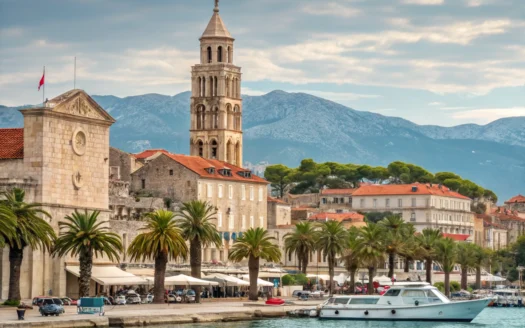
While the benefits of buying off-plan are clear, the location of your investment is paramount to its success. Croatia’s stunning coastline offers diverse opportunities, with certain regions emerging as hubs for new construction. Understanding these hotspots helps you align your property goals—whether for lifestyle, rental income, or capital appreciation—with the right destination. For investors considering an off-plan property in Croatia, two regions consistently stand out: Dalmatia and Istria.
Dalmatia: Split, Trogir, and the Islands
The central Dalmatian coast is a dynamic market driven by its global appeal and booming tourism sector. Here, developers focus on creating high-end properties that cater to discerning international buyers. You will typically find:
- Luxury apartment complexes: Often located in or near vibrant hubs like Split and Trogir, these feature modern amenities, secure parking, and breathtaking sea views.
- Modern villas: Situated along the coast or on popular islands like Brač and Hvar, these properties offer privacy, private pools, and direct access to the Adriatic.
The strategic advantage of this region is its exceptional connectivity, with Split’s international airport and numerous marinas making it easily accessible. This fuels a strong demand for holiday rentals, promising a significant return on investment for off-plan buyers. See new developments in the Split area.
Istria: Rovinj, Poreč, and the Countryside
Often called the “Croatian Tuscany,” Istria offers a different but equally compelling proposition. The focus here is on lifestyle, blending contemporary architecture with the peninsula’s serene natural beauty. Off-plan projects in Istria are characterized by modern villas with minimalist design, floor-to-ceiling windows, and private pools, seamlessly integrated into the rolling green hills and olive groves. The region’s appeal is rooted in its world-class gastronomy, historic hilltop towns, and close proximity to Italy, Slovenia, and Austria, making it a desirable second-home destination for European buyers seeking tranquility and sophistication.
Navigating these regional markets requires deep local expertise. As your trusted advisors, we can help you identify the most promising off-plan property Croatia has to offer, ensuring your investment is secure and perfectly suited to your vision.
Turn Your Croatian Property Dream into a Secure Reality
As we’ve explored, investing in off-plan property Croatia offers a unique opportunity to secure a modern home at a competitive price, often customized to your exact tastes. However, the path to ownership is paved with complexities, from navigating payment structures to conducting rigorous due diligence on developers. The key takeaway is clear: success hinges on preparation and expert guidance to mitigate the inherent risks.
Navigating this landscape alone can feel daunting, especially for foreign buyers. This is where a trusted partner becomes invaluable. At 385 Real Estate, our licensed advisors specialize in guiding international clients through every stage. We provide deep expertise in Croatian property law, perform meticulous due diligence, and maintain a transparent, client-focused approach from your first inquiry to the moment you receive your keys.
Don’t let uncertainty hold you back from your Mediterranean dream. Let our expert advisors guide you through a safe off-plan purchase. Contact us today.
With the right team by your side, your vision of a stunning new home on the Adriatic coast is well within reach.
Frequently Asked Questions About Off-Plan Property in Croatia
What happens if the Croatian developer goes bankrupt during construction?
This is a significant risk, which is why legal protection is paramount. A well-structured purchase contract, drafted by an expert lawyer, should include safeguards like a bank guarantee for your payments. This ensures your funds can be recovered. Thorough due diligence on the developer’s financial health and past projects before signing is your most effective preventative measure. Your trusted real estate advisor can help you vet developers to minimise this risk from the outset.
Can I sell my off-plan property before it is completed?
Yes, selling an off-plan property before completion, often called “flipping,” is possible through a contract assignment. This means you transfer your purchase contract to a new buyer. However, your ability to do this depends entirely on the terms of your original contract with the developer. Many developers permit this but may require their formal consent and sometimes charge an administrative fee. It is essential to have this clause clarified by your lawyer before you sign.
Is the price in an off-plan contract fixed, or can it increase?
The price in your off-plan contract should absolutely be fixed. Your lawyer must ensure the agreement contains a clause that clearly states the final, non-negotiable purchase price. This protects you from unexpected cost escalations due to rising material or labour costs during construction. The only exception should be for any custom upgrades or changes you specifically request, which would be handled through a separate, mutually agreed-upon addendum to the contract.
What taxes do I need to pay on a new-build, off-plan property in Croatia?
When purchasing a new-build off-plan property in Croatia from a developer that is a legal entity (a company), the price already includes Croatia’s 25% Value Added Tax (VAT, or PDV). A major benefit of this is that you are then exempt from paying the separate 3% Real Estate Transfer Tax (RETT). This can represent a significant saving compared to buying a resale property. Always confirm that VAT is explicitly included in the final price.
How can I monitor the construction progress from abroad?
Reputable developers understand the needs of international buyers and provide regular progress reports, including photos and videos, at key construction stages. For greater assurance, your local representative—such as your real estate agent or lawyer—can perform periodic on-site inspections on your behalf. This provides an independent assessment of the progress and build quality, ensuring everything aligns with your contract and giving you complete peace of mind from afar.
Do I need to get an OIB number before signing a reservation agreement?
While you can typically sign a simple reservation agreement and pay a small holding deposit without an OIB (Personal Identification Number), it is an absolute requirement for the main pre-construction or final purchase contract. The OIB is essential for any official property transaction and for registering your ownership in the land registry. We recommend starting the OIB application process as soon as you are serious about a property to avoid any delays.