Commercial Property for Sale in Croatia: An Investor’s Guide
Croatia’s stunning Adriatic coastline and booming tourism sector present a golden opportunity for savvy investors. Yet, for many looking from abroad, the search for commercial property for sale in Croatia can feel as daunting as it is desirable. The dream of securing a high-return asset is often clouded by questions: Where are the best regions for growth? How do you navigate unfamiliar legal frameworks? And how can you be sure of a property’s true potential without being on the ground?
This is where uncertainty ends. Consider this your definitive investor’s guide, built to replace apprehension with confidence. We are here to provide the clarity and insider perspective you need to navigate the market like a local. Inside, we’ll break down the most promising investment hubs from Istria to Dalmatia, revealing which sectors offer the highest potential for ROI. You’ll receive a step-by-step roadmap for the entire legal purchase process, specifically for foreign buyers, ensuring you avoid bureaucratic delays and hidden costs. By the end, you won’t just understand the market; you’ll be ready to seize your opportunity.
Why Invest in Croatian Commercial Real Estate? A Market Overview
Croatia, with its stunning Adriatic coastline and vibrant culture, has emerged as a premier destination not just for tourists, but for savvy international investors searching for commercial property for sale in Croatia. Beyond its Mediterranean charm, the country offers a stable and promising environment for commercial real estate investment. Its full integration into the EU and Eurozone provides a secure foundation, while its strategic position acts as a gateway between Central and Southeast Europe, making the market for commercial property for sale Croatia one ripe with opportunity.
To better understand the landscape and potential, this video offers a glimpse into the types of commercial property for sale in Croatia you can find:
Key Economic Drivers for Investors
Croatia’s accession to the European Union and, more recently, the Eurozone, has been a game-changer for investors. This integration ensures a stable regulatory framework, transparent property rights, and simplified transactions in Euro (€). The economy is characterized by a strong service sector and growing industrial output, which you can explore in this comprehensive Croatian economic overview. This stability, backed by the EU, significantly reduces risk and builds confidence for foreign buyers interested in a commercial property for sale in Croatia.
The tourism sector is the primary engine of the Croatian economy, consistently breaking records. The post-pandemic recovery has been robust, with 2023 seeing over 20 million arrivals, surpassing pre-pandemic levels. This phenomenal growth fuels constant demand for hotels, holiday villas, restaurants, and retail spaces, making the search for a related commercial property for sale in Croatia a very promising venture. Simultaneously, significant government investment in infrastructure—such as the Pelješac Bridge and modernized airports—is enhancing connectivity and unlocking value across the country.
Return on Investment (ROI) Potential
The strong market fundamentals translate directly into attractive returns. Investors can find a wide range of commercial property for sale in Croatia that offers strong potential, with key sectors showing impressive performance:
- Tourism Sector: Properties along the Dalmatian coast can generate robust rental yields, often between 5-8% annually for well-managed boutique hotels or luxury rental units.
- Retail & Office Space: Prime locations in major hubs like Zagreb, Split, and Dubrovnik offer stable, long-term income streams from both local and international tenants.
Beyond rental income, the potential for capital appreciation is significant. In desirable coastal locations and historic city centers, the supply of prime real estate is inherently limited by geography and strict building regulations. This scarcity, coupled with ever-increasing international demand, has driven consistent property value growth, making it an ideal strategy for long-term wealth preservation.
Top Types of Commercial Property for Sale in Croatia
Navigating the market for commercial property for sale in Croatia reveals a landscape rich with diverse opportunities. Your success as an investor depends on aligning your strategy with the right property type, whether you aim for high-yield tourist rentals or stable, long-term commercial leases. The country’s stable economic outlook, detailed in reports like the U.S. Department of State’s Croatia Investment Climate analysis, underpins the potential across various promising sectors. As your trusted advisors, we are here to provide the insider perspective needed to identify the most profitable ventures.
Tourism and Hospitality Properties
Croatia’s world-renowned tourism industry is the primary engine driving demand for specific commercial assets. Along the sun-drenched Adriatic coast, opportunities are abundant. Consider these high-potential investments:
- Apartment Buildings & Boutique Hotels: Small to mid-size “apart-hoteli” in coastal destinations from Istria to Dalmatia offer excellent returns, catering to the consistent influx of international visitors.
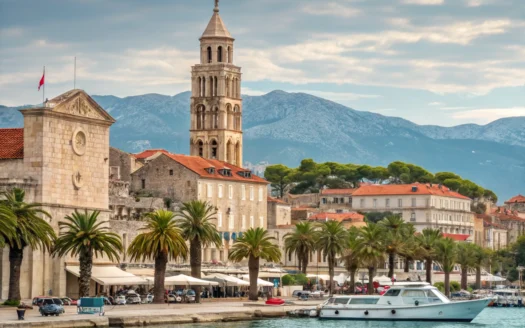
- Restaurants & Bars: Acquiring a hospitality venue in a high-traffic historic center like Split’s Diocletian’s Palace or along Dubrovnik’s city walls can be exceptionally lucrative.
- Luxury Villas: The high-end market for exclusive holiday homes provides a dual opportunity: a source of significant rental income and a valuable appreciating asset.
Retail and Office Spaces
Beyond tourism, Croatia’s urban centers are dynamic hubs of commerce, presenting prime opportunities for retail and office investments. Zagreb, as the nation’s capital and business core, leads the demand for modern commercial spaces. Key areas include high-street shops in bustling city centers and retail units within new, large-scale developments. Furthermore, the burgeoning tech and service sectors have created a strong demand for A-class office spaces, particularly for international companies establishing a regional presence.
Industrial and Agricultural Land
Strategic location and rich natural resources create unique opportunities in land-based assets. With its key position in Europe, Croatia is a growing logistics hub. Warehouses and distribution centers near major ports like Rijeka or along the A1 motorway are critical infrastructure investments with long-term potential. For a more boutique venture, agricultural land in regions like Istria or Pelješac offers the chance to develop a vineyard or olive grove—a venture that combines passion with profit. Finally, undeveloped land parcels in expanding urban zones present a blank canvas for new commercial or mixed-use projects.
Best Regions for Commercial Property Investment in Croatia
Navigating Croatia’s real estate landscape means understanding that location is everything. The country offers a diverse portfolio of opportunities, from bustling, sun-drenched coastal hubs to the stable economic engine of its capital. Your investment strategy will determine whether you thrive on the seasonal energy of tourism or the year-round consistency of a business center. For investors exploring commercial property for sale in Croatia, identifying the right region is the first step toward securing a profitable asset.
Dalmatian Coast: The Tourism Powerhouse
Home to global destinations like Split, Dubrovnik, and the islands of Hvar and Brač, Dalmatia is the heart of Croatia’s tourism industry. This region presents prime opportunities in hospitality—hotels, holiday apartments, and restaurants—as well as high-street retail catering to millions of annual visitors. While this translates to strong seasonal rental yields, investors should be prepared for higher entry prices (often exceeding €5,000 per square meter in prime spots) and the inherent seasonality of the market.
Istria: The High-End Destination
Often called the “Croatian Tuscany,” the Istrian peninsula is synonymous with luxury, gastronomy, and agritourism. Its proximity and cultural ties make it a magnet for investors from Italy, Austria, and Germany. The most promising commercial ventures here include boutique hotels, modern wineries, and exclusive villas designed for high-end rentals. This market values quality and experience over volume, offering a sophisticated alternative to the more crowded southern coast.
Zagreb: The Year-Round Business Hub
As Croatia’s capital and economic core, Zagreb offers a completely different investment profile. Demand for office space, long-term residential rentals for professionals, and logistics facilities is stable and far less exposed to seasonal fluctuations. The city’s continuous development and growing international business community underscore its reliability. As detailed in reports like the U.S. Department of State’s 2025 Investment Climate Statement on Croatia, the nation’s stable political and economic framework provides a solid foundation for commercial ventures centered in the capital.
While these three regions represent the primary markets, up-and-coming areas like the Kvarner Gulf (Rijeka and Opatija) and logistical hubs in inland Croatia are also showing significant growth potential. A trusted advisor can help you align your investment goals with the unique dynamics of each region.
The Buying Process for Foreigners: A Step-by-Step Guide
Navigating the purchase of commercial property for sale in Croatia can feel complex from abroad, but with the right guidance, it is a secure and well-defined process. As your trusted advisors, we have created this clear roadmap to ensure a transparent transaction from start to finish. Both EU and non-EU investors follow a similar path, with a few key distinctions outlined below.
Step 1: Initial Preparations and Due Diligence
Your journey begins with a few essential preparations. The first is obtaining an OIB (Osobni Identifikacijski Broj), a personal identification number required for all financial transactions in Croatia. Next, it is crucial to hire a reputable, independent lawyer and a licensed real estate agent. Their expertise is vital for conducting thorough due diligence on your chosen property, which must include:
- Ownership Verification: Confirming the seller has a clean title in the Land Registry (Zemljišne Knjige).
- Permit Check: Ensuring all necessary building and usage permits are valid and in order.
- Zoning Compliance: Verifying the property’s zoning status aligns with your intended commercial use.
Step 2: From Offer to Pre-Contract
Once due diligence is successfully completed, you will make a formal offer. Upon acceptance, a Pre-Contract (Predugovor) is drafted. This legally binding document outlines all agreed-upon terms, timelines, and conditions. At this stage, a deposit, typically 10% of the purchase price, is paid into an escrow account. This secures the property, taking it off the market while preparing for the final sale.
Step 3: Final Contract and Registration
The final stage involves signing the main Sales Contract (Ugovor o Kupoprodaji), which must be notarized to be legally valid. Following the signing, you will pay the remaining 90% of the purchase price and the property transfer tax, which is currently 3% of the property’s assessed market value. Your lawyer will then submit the notarized contract to the Land Registry to officially register you as the new owner, providing you with indisputable legal title.
Special Considerations for Non-EU Buyers
Investors from outside the EU/EEA generally require approval from the Croatian Ministry of Justice, a process contingent on reciprocity agreements between Croatia and your home country. However, a far more efficient and common strategy is to establish a Croatian limited liability company (d.o.o.). Purchasing commercial property through a local d.o.o. allows you to buy as a Croatian legal entity, bypassing the need for ministry approval entirely. Let our experts guide you through the process.
Financing, Taxes, and Running Your Commercial Property
Securing your ideal commercial property for sale in Croatia is an exciting milestone. The final, crucial step is navigating the financial landscape with clarity and confidence. A clear understanding of financing options, tax obligations, and ongoing management ensures your investment is not only secure but also profitable for years to come. As your trusted advisors, we are here to illuminate this path.
Financing Your Commercial Purchase
For non-resident investors, securing a local mortgage in Croatia can be challenging. Banks often have stringent requirements for foreign nationals, making it an uncommon route. Consequently, the vast majority of international commercial property transactions are completed with cash. Alternatively, some investors secure financing from a bank in their home country. For expert guidance on structuring the financial aspects of such a major purchase, you can discover Saverio Canepa, a specialist in corporate finance. We strongly advise having your funds readily available before you begin your search, as this positions you as a serious buyer and enables you to act decisively when the right opportunity arises.
Understanding Key Croatian Taxes
Navigating Croatia’s tax system is straightforward with expert guidance. When purchasing a commercial property, you will encounter a few key taxes. It is vital to budget for these costs to ensure a smooth transaction:
- Real Estate Transfer Tax (RETT): This is a 3% tax calculated on the market value or contracted price of the property, paid by the buyer. Most resale property transactions are subject to RETT.
- Value Added Tax (PDV/VAT): For newly constructed commercial properties sold by a company within the VAT system, a 25% VAT is typically included in the price. In these cases, the buyer is usually exempt from paying the 3% RETT.
- Ongoing Taxes: Once you own the property, any rental income will be subject to income tax. If you later decide to sell your asset, you may also be liable for capital gains tax, depending on the circumstances of the sale and holding period.
Managing Your Asset and Maximizing Returns
Effectively managing your commercial asset from abroad is the key to maximizing your return on investment. Engaging a reputable local property management company can handle everything from tenant sourcing and rent collection to maintenance, providing you with complete peace of mind. Furthermore, partnering with a local accountant is essential for ensuring tax compliance and optimising your financial strategy. Smart planning and professional oversight transform a simple purchase into a high-performing asset. For bespoke advice on managing your commercial property for sale in Croatia, our team of experts is ready to assist.
Your Croatian Commercial Investment: From Vision to Reality
Investing in Croatia’s commercial real estate market offers a remarkable opportunity for growth, driven by a thriving tourism sector and a strategic European location. As this guide has shown, the potential is immense, but success hinges on navigating the specific legal and financial landscape with clarity and confidence. The key is transforming a complex international transaction into a secure and profitable venture.
Finding the ideal commercial property for sale in Croatia is only the first step. At 385 Real Estate, we are your dedicated allies in this process. We provide specialized expertise in guiding foreign investors, leveraging our deep local knowledge of the Dalmatian coast and beyond. Our unwavering commitment to transparent, professional service ensures your investment journey is not just sound, but seamless from start to finish.
Your vision for a successful commercial enterprise in the heart of the Mediterranean is within reach. Ready to take the next step? Explore our curated commercial property listings.
Frequently Asked Questions: Investing in Croatian Commercial Property
Do I need to set up a Croatian company to buy commercial property?
While EU/EEA citizens can often purchase property as individuals, establishing a Croatian company (d.o.o.) is the most common and efficient method for most international investors. This structure simplifies the acquisition, offers liability protection, and provides a clear framework for managing the property and its revenue. Our team guides clients through the entire company formation process, ensuring every step is handled with the clarity and professional oversight your investment deserves.
What are the typical closing costs associated with a commercial property purchase in Croatia?
When budgeting for your purchase, you should anticipate closing costs that typically range from 5% to 8% of the property’s agreed-upon price. The largest component is the Real Estate Transfer Tax (RETT) at a flat 3%. Other expenses include legal fees (around 1-1.5%), public notary fees, and the real estate agency commission. We believe in complete transparency, providing you with a detailed cost breakdown upfront so you can invest with confidence and no surprises.
Can a US or UK citizen buy commercial real estate in Croatia without restrictions?
Yes, citizens from the US and UK can purchase commercial property for sale in Croatia, based on a principle of reciprocity. However, buying as a private individual requires consent from the Croatian Ministry of Justice, a process that can take several months. To avoid this delay, most non-EU investors choose to purchase through a Croatian-registered company. This is the most secure, streamlined, and efficient path to ownership for international buyers.
What is the role of a public notary in the Croatian property buying process?
In Croatia, a public notary (Javni Bilježnik) plays a crucial, impartial role in all property transactions. Their primary function is to verify the identities of all parties and to solemnize the main sales contract, making it a legally binding and enforceable document. This official verification is a mandatory step for registering your ownership in the Land Registry, providing a critical layer of security and legitimacy to your investment and protecting your interests.
How can I find reliable tenants for my commercial property in Croatia?
Securing reliable tenants is key to a successful investment. We leverage our extensive local network and deep market knowledge to connect you with high-quality commercial tenants, from established local businesses to international brands. For investors based abroad, we also recommend trusted property management partners who can handle everything from tenant screening and lease negotiations to ongoing maintenance, ensuring your asset performs optimally and provides a steady return with minimal hassle.
What are the annual property taxes or holding costs I should be aware of?
Croatia does not currently have a traditional annual property tax based on asset value. Instead, owners are liable for a communal fee (komunalna naknada) for local infrastructure, with the amount varying by municipality and property size. If your property generates rental income, this revenue will be subject to income tax. Our advisors provide a clear overview of all potential holding costs, ensuring you have a comprehensive financial picture for your investment.